

In 2026, marketing skills alone are no longer enough.
You can be great at SEO, paid ads, content, or analytics — but if people don’t know you, trust you, or remember you, opportunities pass silently.
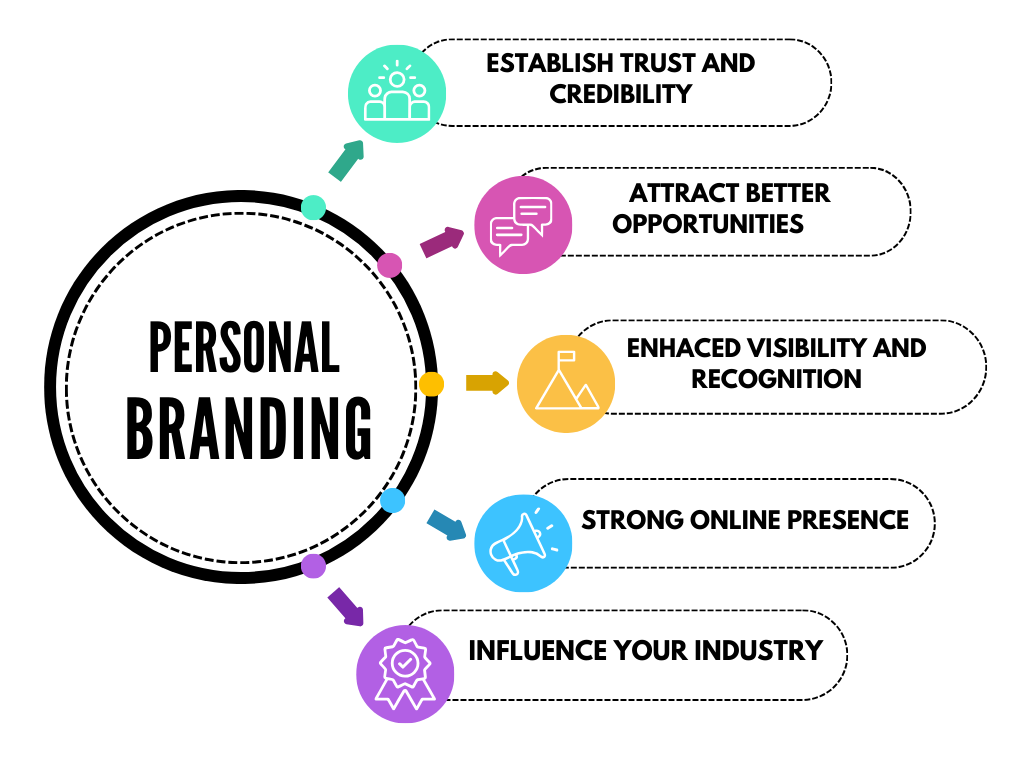
This is where personal branding steps in.
Personal branding is no longer a buzzword or something reserved for influencers. For marketers, it has become a career survival skill — shaping how clients, companies, and communities perceive your value.
This blog explains what personal branding really means for marketers in 2026, why it matters more than ever, and how to build one authentically without pretending to be someone you’re not.
What Is Personal Branding (In Simple Words)?
Personal branding is how people describe you when you’re not in the room.
It’s the combination of:
- Your expertise
- Your opinions
- Your communication style
- Your values
- Your digital presence
For marketers, personal branding answers questions like:
- “What is this person known for?”
- “Can I trust their advice?”
- “Would I hire or follow them?”
In 2026, your online footprint often speaks before your resume does.
Why Personal Branding Matters More for Marketers in 2026

4
The marketing industry is more crowded than ever.
Thousands of marketers:
- Have similar certifications
- Use the same tools
- Learn from the same courses
So what creates differentiation?
Identity.
Key reasons personal branding is critical now:
- AI leveled technical skills
Tools can write copy, generate strategies, and analyze data.
But AI can’t replicate your thinking, experience, and voice. - Trust beats credentials
People follow marketers they trust — not just those with degrees. - Opportunities chase visibility
Jobs, clients, speaking invites, and collaborations often come to marketers who are visible, not just capable. - Marketing is public by nature
If you market brands but can’t market yourself, credibility suffers.
Personal Brand vs Professional Image: Know the Difference
Many marketers confuse personal branding with:
- Posting polished photos
- Writing motivational quotes
- Acting “professional” online
That’s not personal branding — that’s surface-level visibility.
Personal branding is:
- Sharing insights from real work
- Expressing informed opinions
- Teaching what you’ve learned
- Showing your thinking process
It’s not about being perfect.
It’s about being recognizable and reliable.
The Core Pillars of Personal Branding for Marketers
1. Clarity: What Do You Want to Be Known For?
Before posting anything, answer this:
“If someone mentions my name, what should come to their mind?”
You don’t need to cover everything.
In fact, narrow positioning wins.
Examples:
- SEO for local businesses
- Paid ads for e-commerce brands
- Content strategy for founders
- Growth marketing for startups
Clarity prevents confusion — and confusion kills brands.
2. Consistency: Showing Up Beats Going Viral
4
Personal branding isn’t built from one viral post.
It’s built from:
- Repeated insights
- Familiar themes
- Consistent tone
- Regular presence
In 2026, algorithms reward:
- Engagement depth
- Audience retention
- Authentic interaction
Consistency builds familiarity.
Familiarity builds trust.
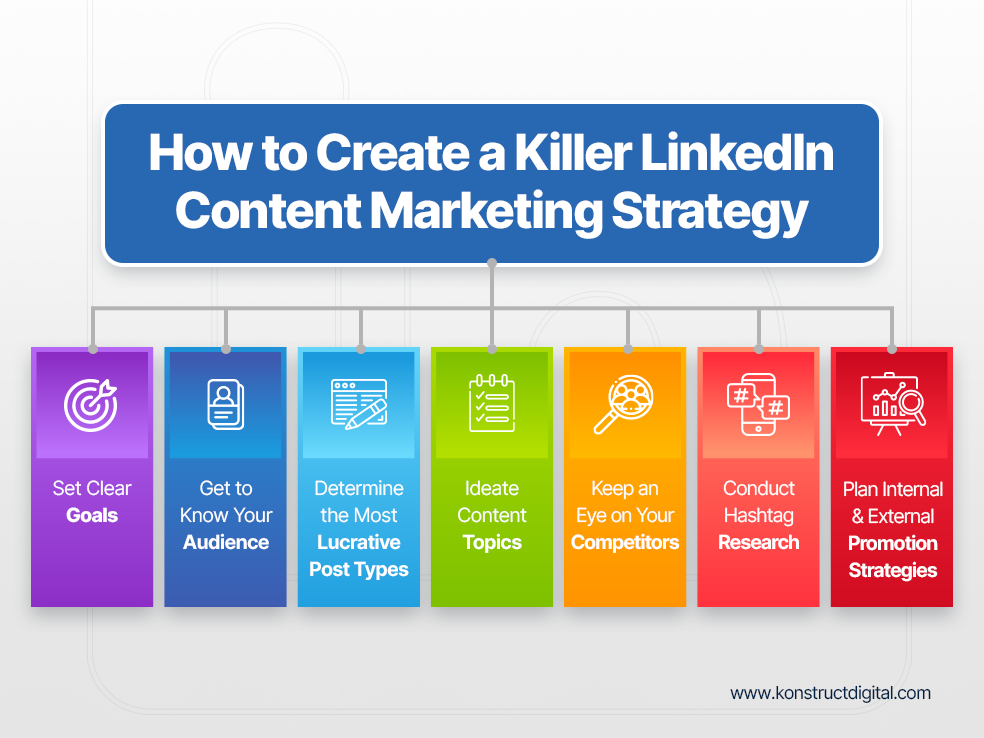
3. Credibility: Proof Over Promises
Anyone can claim expertise.
Strong personal brands show evidence.
Credibility comes from:
- Case studies
- Lessons from failures
- Before-after insights
- Real experiences
You don’t need massive results — you need honest ones.
Even sharing:
- “What didn’t work and why”
builds more trust than exaggerated success stories.
Platforms That Matter for Marketers in 2026

4
You don’t need to be everywhere.
You need to be effective somewhere.
- Ideal for B2B marketers
- Great for thought leadership
- High trust platform
X (Twitter)
- Best for opinions and trends
- Strong community conversations
- Fast visibility
- Works well for storytelling
- Humanizes your brand
- Visual + personal
YouTube / Podcasts
- Builds deep authority
- Long-term credibility
- Slower growth, higher trust
Choose based on:
- Your comfort
- Your audience
- Your content style
Content That Builds a Strong Personal Brand
What to Talk About?
Your content should revolve around:
- What you know
- What you’re learning
- What you believe
- What you question
High-impact content formats:
- “What I learned from…”
- “Why most marketers get this wrong”
- “Behind the scenes of a campaign”
- “Mistakes I made and how I fixed them”
People don’t connect with perfection.
They connect with progress.
The Role of Authenticity in 2026
Audiences in 2026 are highly aware.
They can sense:
- Over-polished posts
- Fake confidence
- Forced storytelling
Authenticity doesn’t mean oversharing.
It means being real, relevant, and respectful.
Be honest about:
- Your stage
- Your struggles
- Your learning curve
A growing marketer with honesty often builds a stronger brand than an expert with ego.
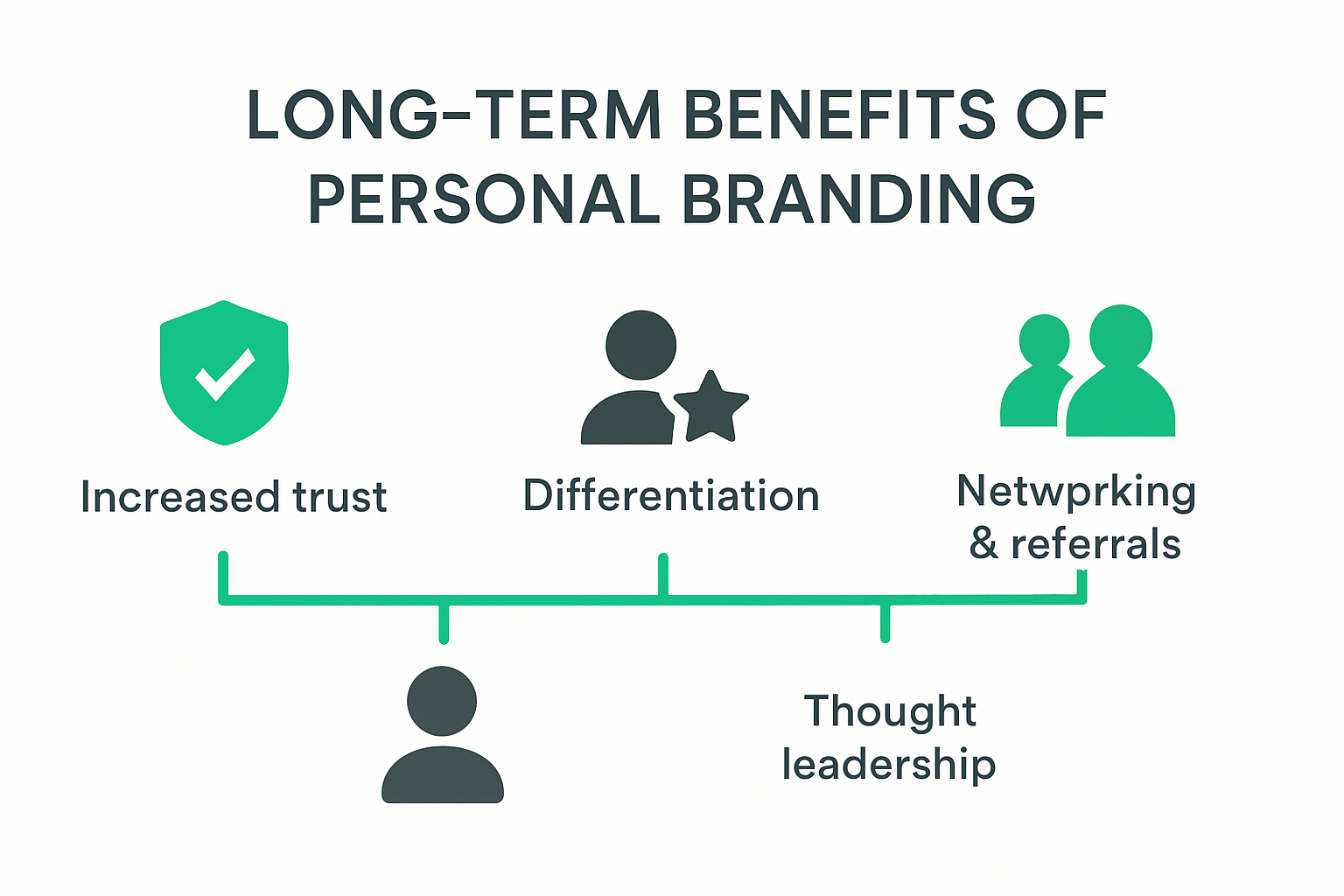
Personal Branding Is a Long-Term Asset

4
Your personal brand:
- Compounds over time
- Travels with you across jobs
- Works even when you’re not posting
It can lead to:
- Better job offers
- Premium clients
- Speaking opportunities
- Business partnerships
Unlike resumes, personal brands don’t expire.
Common Mistakes Marketers Make With Personal Branding
- Trying to copy others
- Chasing trends without relevance
- Being inconsistent
- Over-selling instead of educating
- Waiting to be “perfect” before starting
The biggest mistake?
Not starting at all.
Personal Branding for Freelancers, Employees & Founders
- Freelancers: Attract better clients, reduce price pressure
- Employees: Build authority beyond one company
- Founders: Humanize the business and build trust faster
Personal branding isn’t risky — being invisible is.
How Long Does Personal Branding Take?
There’s no shortcut.
But realistic expectations:
- 3 months → clarity
- 6 months → recognition
- 12 months → authority
Consistency beats intensity.
Final Thoughts: Your Name Is Your Strongest Asset
In 2026, marketers are not just evaluated by:
- Skills
- Tools
- Certifications
They are evaluated by:
- Visibility
- Voice
- Trust
Personal branding isn’t self-promotion.
It’s self-representation.
If you don’t tell your story, someone else will — or worse, no one will notice.
Start small.
Be consistent.
Stay honest.
Your personal brand will grow with you.
